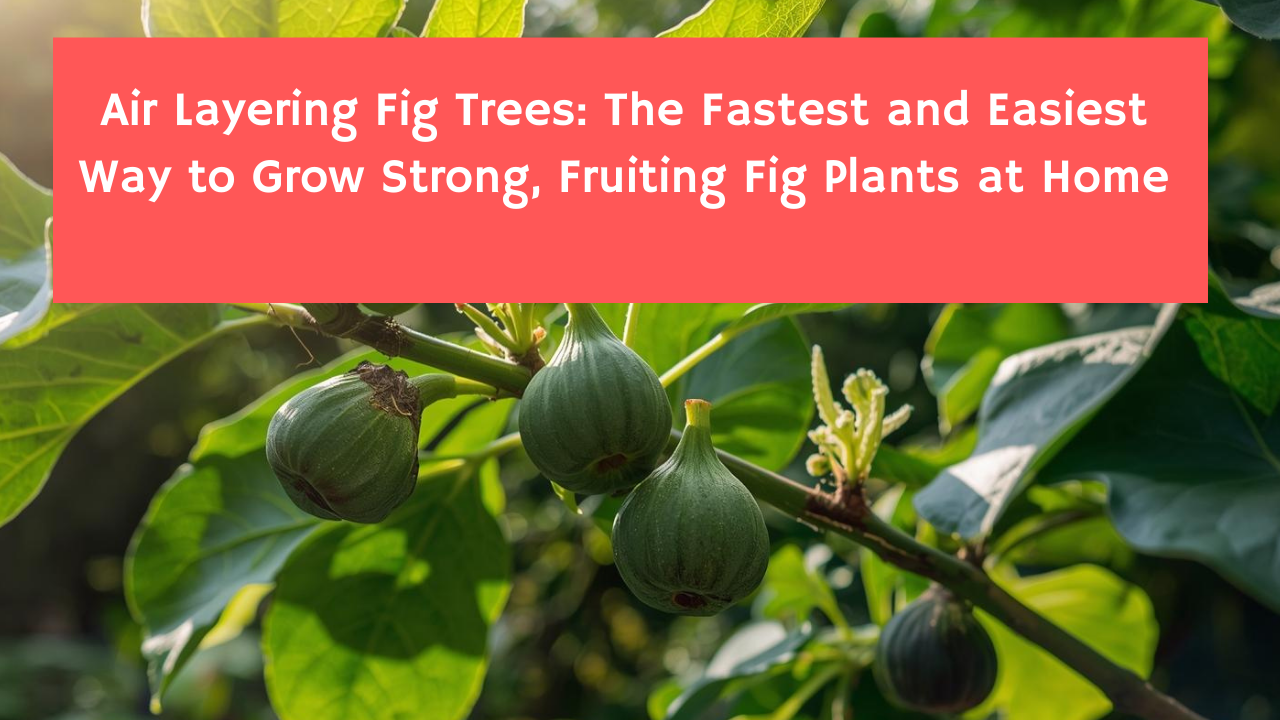
Fig trees are loved for their sweet fruit, attractive foliage, and adaptability to home gardens. While figs can be grown from seeds or cuttings, these methods often require patience and come with inconsistent results. Air layering offers a faster, more reliable alternative that allows gardeners to grow strong, fruiting fig plants with minimal risk and waiting time.
Air layering works especially well for fig trees because they root readily and respond quickly to this technique. By encouraging roots to form while the branch is still attached to the parent tree, air layering produces mature, vigorous plants that establish quickly and often fruit sooner. This guide explains how to air layer fig trees step by step, using simple methods suitable for beginners and experienced gardeners alike.
Why Air Layering Is Ideal for Fig Trees
Fig trees naturally root easily from stems.

Their flexible branches and active sap flow make them excellent candidates for air layering. Unlike cuttings, which must survive without support, air-layered branches continue receiving water and nutrients from the parent tree while roots develop.
This results in higher success rates, stronger root systems, and faster establishment after planting.
Understanding How Fig Trees Respond to Air Layering
When a fig branch is wounded correctly, it responds by producing roots at the injury site.
This is a natural survival mechanism. The plant senses interrupted nutrient flow and initiates root formation to compensate.
Because the branch remains attached, the fig tree supports this process continuously, leading to reliable rooting.
Benefits of Air Layering Fig Trees at Home
Air layering offers several advantages.

It produces plants that are genetically identical to the parent, preserving fruit quality and growth habit. It also shortens the time to fruiting because the new plant originates from mature wood.
For home gardeners, air layering reduces failure rates and eliminates the uncertainty of seed-grown figs.
Best Time to Air Layer Fig Trees
Timing influences rooting speed and success.

Air layering fig trees works best during active growth periods when the tree is healthy and producing new leaves. During this time, sap flow supports rapid root development.
Avoid air layering during extreme heat or cold, as stress slows the process.
Choosing the Right Fig Branch for Air Layering
Branch selection is critical.

Choose a healthy, disease-free branch that is neither too young nor too old. Semi-hardwood branches with good leaf growth work best.
Avoid branches that are heavily fruiting, as energy is diverted away from root formation.
Ideal Branch Thickness and Position
Branch thickness matters.

A branch about the thickness of a pencil to a finger is ideal. It should be flexible but firm.
Branches that receive good light and airflow often root faster and produce stronger new plants.
Tools and Materials Needed for Air Layering Figs
Air layering requires only basic supplies.

You will need a sharp, clean cutting tool, a moisture-retaining rooting medium, and wrapping material to hold everything in place.
Clean tools are essential to prevent infection and improve rooting success.
Preparing the Branch for Air Layering
Preparation must be done carefully.

Make a shallow cut or remove a small ring of bark around the branch. This interrupts nutrient flow and triggers root formation.
The wound should expose inner tissue without weakening the branch structure.
Importance of Proper Wounding Technique
Correct wounding is essential.
If the cut is too shallow, roots may not form. If it is too deep, the branch may weaken.
A clean, precise cut encourages faster and healthier rooting.
Applying the Rooting Medium Correctly
The rooting medium keeps the wounded area moist.
It should be damp but not dripping. Excess water increases the risk of rot, while dryness slows root growth.
Ensure the medium fully surrounds the wound to promote even root development.
Wrapping the Air Layer Securely
Wrapping keeps conditions stable.
The wrap should hold the medium firmly against the branch while preventing moisture loss. It should also allow minimal airflow to avoid mold.
Secure wrapping ensures consistent moisture and temperature.
Monitoring Moisture During Root Development
Moisture balance determines success.
Check the air layer periodically to ensure the medium remains moist. If it dries out, gently re-moisten it.
Avoid opening the wrap too often, as this disrupts the rooting environment.
Light and Temperature Conditions for Best Results
The parent fig tree should continue receiving normal light.
However, the air-layered section should not overheat in direct sun. Balanced light and warm temperatures encourage steady root growth.
Stable conditions improve rooting speed.
How Long Fig Trees Take to Root With Air Layering
Fig trees root relatively quickly.
In favorable conditions, roots may begin forming within a few weeks. Full root development usually takes longer.
Patience is important. Cutting too early can damage developing roots.
Signs That Roots Have Formed Successfully
Visible roots indicate success.
Roots may appear as white or light-colored strands around the wounded area. The branch may also feel more stable.
Once a healthy root mass is visible, the branch is ready to be separated.
Separating the New Fig Plant From the Parent Tree
Separation should be done gently.
Cut below the rooted area using clean tools. Handle the new plant carefully to protect the roots.
This step turns the layered branch into an independent fig plant.
Potting the Newly Air-Layered Fig Tree
Potting supports adjustment.
Use well-draining soil in a container suited to the root size. Water lightly to settle the soil.
Avoid heavy feeding immediately after potting.
Post-Separation Care for Young Fig Plants
New fig plants need protection.
Place them in bright, indirect light initially. Protect from strong sun, wind, and temperature extremes.
Gradual adjustment improves survival and long-term growth.
Hardening Off Air-Layered Fig Trees
Hardening off prevents shock.
Slowly expose the plant to stronger light and outdoor conditions over several days.
This strengthens leaves and stems.
Feeding Newly Propagated Fig Trees
Feeding should be minimal at first.
Once new growth appears, light feeding supports development. Overfeeding can damage young roots.
Balanced nutrition encourages healthy establishment.
Common Mistakes When Air Layering Fig Trees
Rushing the process is the most common mistake.
Cutting before roots are well-developed leads to failure. Allow adequate time for rooting.
Poor moisture control and weak branch selection also reduce success.
Why Some Air Layering Attempts Fail
Failures usually result from dryness, rot, or improper wounding.
Using unhealthy parent plants or layering during stressful weather also reduces success.
Understanding these factors improves future attempts.
Comparing Air Layering to Other Fig Propagation Methods
Air layering outperforms cuttings in reliability.
Cuttings may dry out or fail to root, while air layering maintains support from the parent tree.
Compared to seeds, air layering produces fruit much faster and preserves quality.
Air Layering Fig Trees in Small Gardens
Air layering is space-efficient.
It does not require extra rooting space during development. This makes it ideal for small gardens, balconies, and patios.
Gardeners can propagate without crowding.
Using Air Layering to Preserve Favorite Fig Varieties
Air layering preserves exact genetics.
This is ideal for propagating favorite or rare fig varieties. The new plant will produce the same fruit as the parent.
This method ensures consistency and reliability.
Long-Term Growth of Air-Layered Fig Trees
Air-layered fig trees establish quickly.
Because they originate from mature branches, they often grow faster and fruit earlier than other propagation methods.
With proper care, they can produce for many years.
Real Experiences From Home Fig Growers
One home grower shared that air layering produced a fruiting fig much faster than expected. “It behaved like an established tree almost immediately,” they said.
Another noted that moisture control was the key to success.
Observations From Experienced Fig Gardeners
Experienced gardeners often prefer air layering.
They highlight its reliability, speed, and ability to preserve quality. Many use it as their primary fig propagation method.
Consistency and patience are emphasized.
Long-Term Benefits of Air Layering Fig Trees
Air layering builds confidence and skill.
Once mastered, it can be applied to many fruit trees. It reduces costs and increases self-sufficiency.
This technique transforms how gardeners approach propagation.
What You Should Know Before Air Layering Fig Trees
Air layering is simple but requires patience.
Healthy parent plants and proper moisture control are essential. Avoid rushing the separation stage.
With practice, success rates increase significantly.
Questions and Answers About Air Layering Fig Trees
Is air layering fig trees easy?
Yes, figs respond very well to air layering.
Does air layering produce fruit faster?
Yes, much faster than seeds or cuttings.
When is the best time to air layer figs?
During active growth periods.
Is rooting hormone required?
No, but it can help consistency.
How long does air layering take?
Several weeks to a few months.
Can air layering be done on potted fig trees?
Yes, very easily.
Do air-layered figs need special care?
Only gentle care at first.
Why did my air layer fail?
Likely due to dryness or early cutting.
Can multiple branches be layered at once?
Yes, on healthy trees.
Is air layering better than cuttings?
Yes, more reliable for figs.
Can beginners succeed with air layering?
Yes, it is beginner-friendly.
Does air layering harm the parent tree?
No, when done correctly.
Can air-layered figs grow in pots?
Yes, very well.
Is air layering worth learning?
Absolutely.






Leave a Comment