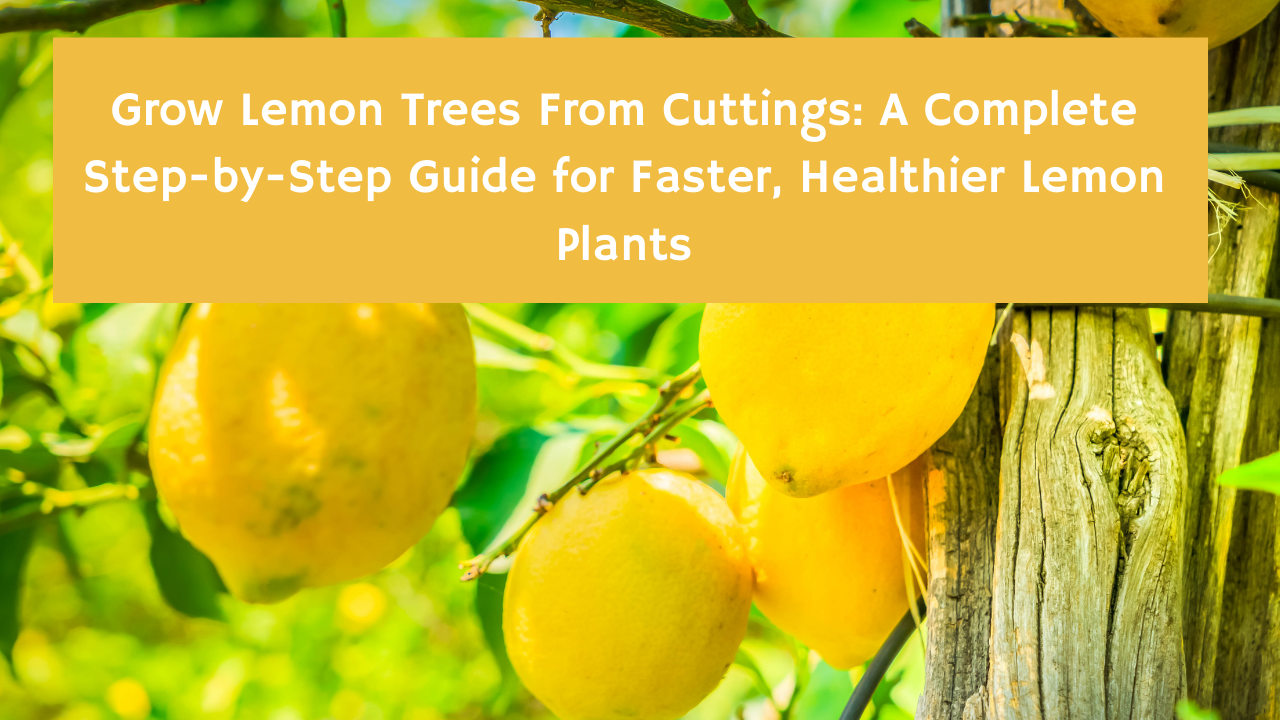
Growing lemon trees from cuttings is one of the fastest and most reliable ways to enjoy healthy, productive citrus plants at home. While growing lemons from seeds can take many years and produce unpredictable results, cuttings allow you to clone a proven tree and significantly shorten the time to fruiting. For home gardeners who want consistent quality and quicker results, this method is hard to beat.
Many beginners hesitate to try propagation, assuming it is complicated or risky. In reality, lemon trees respond very well to cuttings when basic steps are followed carefully. This complete guide explains everything you need to know, from selecting the right branch to caring for your newly rooted plant, using clear, practical techniques that work in real home conditions.
Understanding Why Lemon Cuttings Root Successfully
Lemon trees naturally contain growth hormones that encourage root formation.

When a healthy cutting is placed in the right environment, it redirects energy from leaf growth to root development. Unlike seeds, which must develop roots, stems, and leaves from scratch, cuttings already have mature tissue.
This head start is why lemon trees grown from cuttings establish faster and often fruit earlier.
Advantages of Growing Lemon Trees From Cuttings
Growing lemons from cuttings offers several advantages.

The new plant is genetically identical to the parent, ensuring fruit quality and flavor remain the same. Cuttings also bypass the long juvenile phase common in seed-grown trees.
For gardeners with limited space, cuttings produce compact, manageable trees ideal for pots or small gardens.
Best Time to Take Lemon Cuttings
Timing improves success rates.

Lemon cuttings root best during periods of active growth when the plant is healthy and producing new shoots. Avoid taking cuttings during extreme heat or cold.
Choosing the right time ensures the cutting has enough stored energy to develop roots.
Selecting the Right Lemon Branch for Cuttings
Branch selection is critical.

Choose a healthy, disease-free branch that is firm but not woody. The branch should show active growth and have several leaf nodes.
Avoid branches that are flowering or fruiting heavily, as these divert energy away from root formation.
Proper Length and Cutting Technique
Cuttings should be the right size.

A cutting around 6–8 inches long works well. Make the cut just below a leaf node using clean, sharp tools.
Clean cuts reduce infection risk and speed up root development.
Preparing the Lemon Cutting for Planting
Preparation helps reduce stress.

Remove excess leaves, leaving only a few at the top. This reduces moisture loss while still allowing photosynthesis.
Some gardeners lightly scrape the base of the cutting to expose tissue, encouraging root formation.
Using Rooting Hormone for Better Results
Rooting hormone is optional but helpful.

It increases the speed and consistency of root development, especially for beginners. Apply a small amount to the cut end before planting.
Excess hormone should be avoided, as it can damage tissues.
Choosing the Right Growing Medium
The growing medium must balance moisture and airflow.
A well-draining mix works best. Heavy soil traps moisture and increases the risk of rot.
The medium should hold moisture without becoming soggy.
Planting Lemon Cuttings Correctly
Planting depth matters.
Insert the cutting so at least one node is below the surface. Firm the medium gently around the stem.
Water lightly to settle the medium without flooding it.
Creating the Ideal Environment for Rooting
Rooting requires stable conditions.
Place cuttings in bright, indirect light. Avoid direct sun, which causes dehydration.
Warm, stable temperatures encourage root development.
Importance of Humidity During Rooting
Humidity prevents moisture loss.
Covering the cutting lightly helps maintain humidity while roots develop. Ensure airflow to prevent mold.
Humidity support is especially helpful in dry indoor environments.
Watering Lemon Cuttings Properly
Watering must be careful.
Keep the medium slightly moist but never waterlogged. Overwatering causes rot and failure.
Check moisture regularly rather than following a fixed schedule.
How Long Lemon Cuttings Take to Root
Rooting time varies.
Most lemon cuttings root within several weeks under good conditions. Some may take longer depending on environment and branch quality.
Patience is important. Disturbing cuttings slows progress.
Signs That Roots Have Formed
New growth is a positive sign.
When leaves remain firm and new shoots appear, roots are likely forming. Gentle resistance when tugged lightly indicates rooting.
Avoid pulling cuttings out to check roots directly.
Transplanting Rooted Lemon Cuttings
Transplant carefully.
Once roots are well-established, move the plant to a slightly larger container with nutrient-rich soil.
Handle gently to avoid damaging new roots.
Hardening Off Young Lemon Plants
Gradual adjustment prevents shock.
Expose the plant slowly to brighter light and outdoor conditions if applicable.
Hardening off improves long-term survival.
Feeding Young Lemon Plants
Feeding should be light initially.
Use diluted fertilizer only after new growth appears. Avoid heavy feeding during early stages.
Balanced nutrition supports healthy development.
Pruning Lemon Cuttings for Shape
Pruning encourages balanced growth.
Light pruning helps shape the plant and encourages branching. Avoid heavy pruning until the plant is established.
Shaping early creates stronger structure.
Common Problems and How to Avoid Them
Rot is the most common issue.
It usually results from excess moisture or poor drainage. Improve airflow and reduce watering.
Wilting often indicates low humidity or excessive heat.
Comparing Lemon Cuttings to Other Propagation Methods
Cuttings offer faster results than seeds.
They are simpler than grafting and more reliable for beginners. Air layering is another effective option, but cuttings remain easier for most home gardeners.
Each method has its place depending on goals and experience.
Growing Lemon Cuttings Indoors vs Outdoors
Indoor rooting offers more control.
Outdoor rooting may work in warm climates but is riskier due to temperature fluctuations.
Beginners often achieve better results indoors.
Growing Lemon Trees in Pots After Rooting
Pots offer flexibility.
Container-grown lemon trees can be moved for light and protection. Proper pot size and drainage are essential.
Potted lemons are ideal for small spaces.
Long-Term Care for Lemon Trees Grown From Cuttings
Once established, care is straightforward.
Provide adequate sunlight, consistent watering, and occasional feeding. Pruning maintains shape and productivity.
Well-cared-for plants can produce fruit for many years.
Real Experiences From Home Gardeners
One gardener shared that cuttings produced fruit much faster than seed-grown plants. “I saw flowers in just a few years,” they said.
Another noted that humidity control made the biggest difference.
Observations From Citrus Growers
Experienced growers recommend cuttings for uniform results.
They highlight consistency, speed, and reliability as key advantages.
Many consider cuttings the easiest citrus propagation method.
Long-Term Benefits of Growing Lemon Trees From Cuttings
Cuttings save time and effort.
They preserve quality and reduce uncertainty. Home gardeners gain confidence through predictable success.
This method makes citrus growing more accessible.
What You Should Know Before Growing Lemon Trees From Cuttings
Not every cutting will succeed.
Taking multiple cuttings improves success rates. Clean tools and patience are essential.
With proper care, beginners can succeed easily.
Questions and Answers About Growing Lemon Trees From Cuttings
Is growing lemon trees from cuttings easy?
Yes, very beginner-friendly.
Do cuttings fruit faster than seeds?
Yes, significantly faster.
Is rooting hormone necessary?
No, but it improves success.
How long do cuttings take to root?
Several weeks on average.
Can cuttings be rooted indoors?
Yes, indoor rooting works well.
Should flowers be removed from cuttings?
Yes, to focus on rooting.
How often should cuttings be watered?
Lightly, keeping soil moist.
Can lemon cuttings be grown in pots?
Yes, pots are ideal.
Why are my cuttings rotting?
Likely due to overwatering.
Can I take cuttings year-round?
Best during active growth.
When should rooted cuttings be transplanted?
After strong roots form.
Do cuttings need sunlight?
Bright, indirect light is best.
Are cuttings reliable for beginners?
Yes, very reliable.
Is this method worth trying?
Absolutely.











Leave a Comment