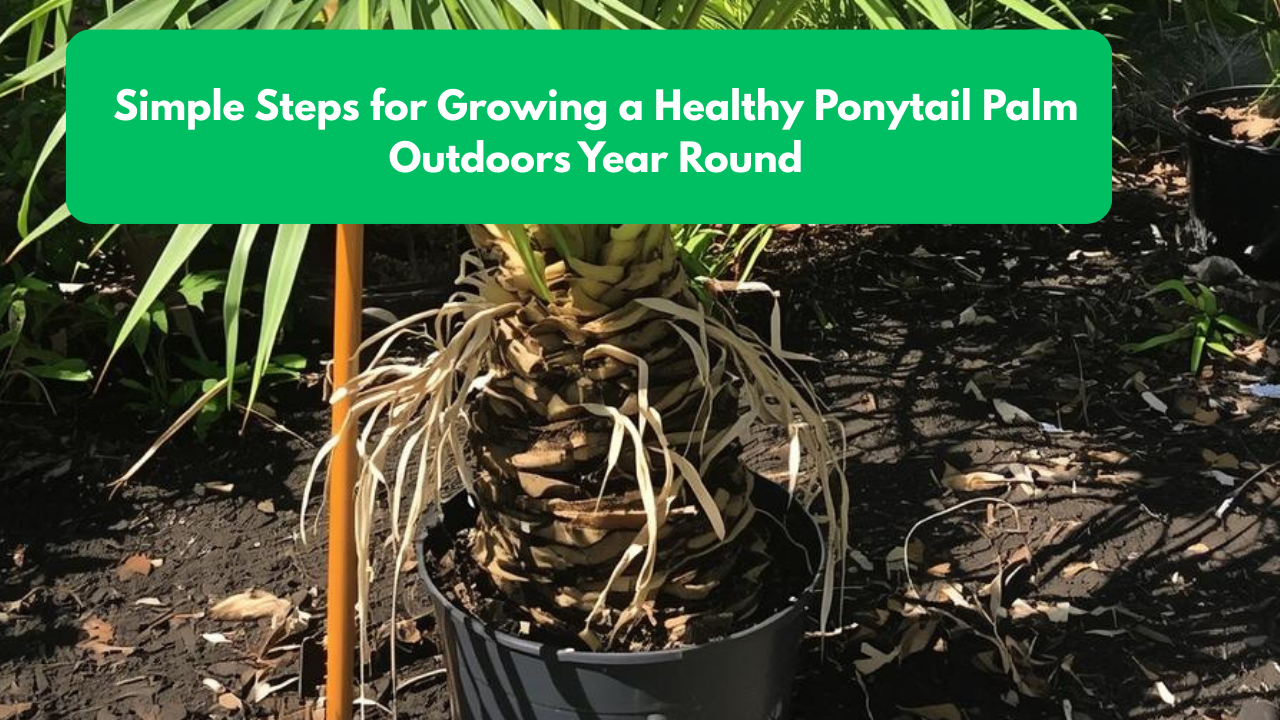
The ponytail palm is one of those plants that instantly catches attention. With its thick, swollen trunk and long, arching leaves that spill outward like a fountain, it adds character and movement to any outdoor space. Despite its name, the ponytail palm is not a true palm at all, but a hardy, drought-tolerant plant that thrives with surprisingly little care.
Many people grow ponytail palms indoors, but in the right conditions, they perform exceptionally well outdoors year round. When planted correctly and given time to establish, they become long-lived landscape plants that require minimal maintenance. This guide explains simple, practical steps to grow a healthy ponytail palm outdoors throughout the year, whether you are a beginner or an experienced gardener.
Understanding the Ponytail Palm and Its Growth Habit
The ponytail palm has a unique growth structure.
Its swollen base, known as a caudex, stores water. This allows the plant to survive long dry periods and makes it very forgiving of missed watering.
Above the trunk, long, narrow leaves grow in tufts, creating the distinctive ponytail appearance. Growth is slow but steady, and over time the plant develops a strong, sculptural presence in the landscape.
Why Ponytail Palm Is Ideal for Outdoor Growing
Ponytail palms are well-suited to outdoor environments because of their toughness.
They tolerate heat, drought, and poor soil better than many ornamental plants. Once established, they require far less attention than traditional palms or tropical plants.
Their architectural shape also makes them excellent focal plants in gardens, courtyards, and entryways.
Choosing the Right Location for Outdoor Planting
Location is the most important decision.
Choose a spot that receives plenty of sunlight. Ponytail palms grow best in full sun to light shade. More sunlight encourages compact growth and stronger trunks.
Ensure the location has excellent drainage. Low-lying areas where water collects are unsuitable, as standing water damages roots.
Understanding Sunlight Needs Outdoors
Sunlight directly affects growth and appearance.
Outdoors, ponytail palms thrive in bright conditions. At least 6 hours of direct sunlight daily is ideal.
In very hot climates, some light afternoon shade may prevent leaf scorch, especially for young plants that are newly planted.
Soil Requirements for Healthy Growth
Good drainage is more important than soil richness.
Ponytail palms prefer sandy or gritty soil that allows water to pass through quickly. Heavy clay soil must be amended with sand or gravel to improve drainage.
Rich, moisture-retentive soil increases the risk of root rot and should be avoided.
Preparing the Planting Area
Prepare the planting site carefully.
Dig a hole wider than the root ball but no deeper. The base of the plant should sit at the same level it was growing previously.
Loosen surrounding soil to encourage roots to spread outward rather than downward.
Planting Ponytail Palm Correctly Outdoors
Place the ponytail palm gently into the hole.

Backfill with well-draining soil and press lightly to remove air pockets. Do not compact the soil tightly.
Water lightly after planting to settle the soil. Avoid soaking the area, as the roots are sensitive to excess moisture during establishment.
Watering Ponytail Palm the Right Way
Watering is where many mistakes occur.
During the first few months after planting, water sparingly but consistently to help roots establish. Allow the soil to dry out completely between watering.
Once established, ponytail palms require very little water. Overwatering is far more harmful than underwatering.
Adjusting Watering Through the Seasons
Watering needs change throughout the year.
In warm months, occasional deep watering is sufficient. In cooler months, watering should be reduced significantly.
During winter, natural rainfall may be enough in many regions.
Mulching and Ground Cover Considerations
Mulching should be used carefully.
A thin layer of gravel or coarse mulch helps prevent weed growth and improves drainage. Avoid thick organic mulch directly against the trunk.
Keeping the base dry reduces the risk of rot and fungal problems.
Temperature Tolerance and Climate Suitability
Ponytail palms prefer warm climates.
They tolerate high temperatures very well and are suitable for regions with long, hot summers.
They are less tolerant of prolonged cold and frost. Mild cold may be tolerated briefly, but consistent freezing temperatures cause damage.
Growing Ponytail Palm Outdoors Year Round in Cooler Regions
In cooler climates, extra planning is needed.
Choose the warmest, most sheltered location available, such as near a south-facing wall. This provides protection from wind and cold.
In regions with occasional frost, covering the plant during cold snaps helps prevent damage.
Protecting Ponytail Palm From Cold Weather
Cold protection improves survival.
Cover the base with dry mulch or straw during cold periods, but remove it when temperatures rise.
For young plants, frost cloth or temporary coverings provide additional protection during extreme weather.
Feeding Ponytail Palm Outdoors
Ponytail palms have low nutrient needs.
A light application of balanced fertilizer once or twice during the growing season is sufficient.
Overfeeding leads to weak growth and increases susceptibility to rot.
Pruning and Leaf Maintenance
Pruning is minimal.
Remove only dead, damaged, or severely browned leaves by cutting them near the base. Avoid trimming healthy green leaves unnecessarily.
Natural leaf drop is normal as the plant grows and ages.
Managing Growth Rate and Expectations
Growth is slow but consistent.
Outdoor plants grow faster than indoor ones, but patience is still required. Significant size increase takes several years.
This slow growth contributes to the plant’s long lifespan and low maintenance requirements.
Common Problems and How to Prevent Them
Yellowing leaves usually indicate overwatering or poor drainage. Improve drainage and reduce watering frequency.
Brown leaf tips may result from cold stress or sudden environmental changes.
Soft or mushy trunks are a sign of serious overwatering and require immediate action.
Pest and Disease Resistance Outdoors
Ponytail palms are naturally resistant to most pests.
Outdoor plants rarely experience serious infestations. Healthy plants grown in suitable conditions usually remain problem-free.
Good airflow and proper spacing further reduce disease risk.
Growing Ponytail Palm in Containers Outdoors
Container growing is an option for flexibility.
Large, well-draining containers allow ponytail palms to be moved if weather conditions change. Containers should be heavy enough to support the plant’s weight.
Container-grown plants may need slightly more frequent watering, but the same drying principles apply.
Long-Term Care for Mature Outdoor Plants
As ponytail palms mature, care becomes even simpler.
Established plants require minimal watering, occasional feeding, and basic leaf cleanup.
They become reliable landscape features with very little ongoing effort.
Using Ponytail Palm in Outdoor Garden Design
Ponytail palms add structure and visual interest.
They work well as standalone focal plants or grouped with succulents and drought-tolerant species.
Their unique form complements modern, desert, and tropical-style landscapes.
Real Experiences From Outdoor Gardeners
A homeowner shared that their ponytail palm survived long dry summers with almost no care. “Once it was established, I barely watered it, and it just kept growing,” they said.
Another gardener noted that planting in sandy soil made all the difference compared to earlier attempts in heavy soil.
Observations From Low-Maintenance Gardeners
Gardeners who prefer low-maintenance landscapes often praise ponytail palms.
They highlight drought tolerance, minimal pruning needs, and strong visual impact.
Many consider it one of the easiest outdoor ornamental plants to maintain.
Long-Term Benefits of Growing Ponytail Palm Outdoors
Ponytail palms are long-lived plants.
With proper care, they can thrive for decades, increasing in size and character over time.
Their durability makes them excellent long-term investments for outdoor spaces.
What You Should Know Before Growing Ponytail Palm Outdoors
Ponytail palms do not like frequent watering.
Drainage and sunlight are far more important than fertilizer or rich soil.
Once established, they reward patience with reliability and unique beauty.
Questions and Answers About Growing Ponytail Palm Outdoors
Can ponytail palm grow outdoors year round?
Yes, in warm climates with proper drainage.
How much sunlight does it need?
Full sun to light shade.
Is ponytail palm drought-tolerant?
Yes, very drought-tolerant.
Does it tolerate frost?
Only brief, light frost.
How often should it be watered?
Only when soil is completely dry.
Can it grow in heavy soil?
No, drainage must be improved.
Does it need fertilizer?
Only light feeding during growth season.
How big does it grow outdoors?
It can grow very large over time.
Is pruning necessary?
Only to remove dead leaves.
Can it grow in containers outdoors?
Yes, with proper drainage.
Is ponytail palm low-maintenance?
Yes, extremely low-maintenance.
Does it attract pests?
Rarely.
Is it beginner-friendly?
Yes, very easy to grow.
How long does it live?
It can live for decades


Leave a Comment