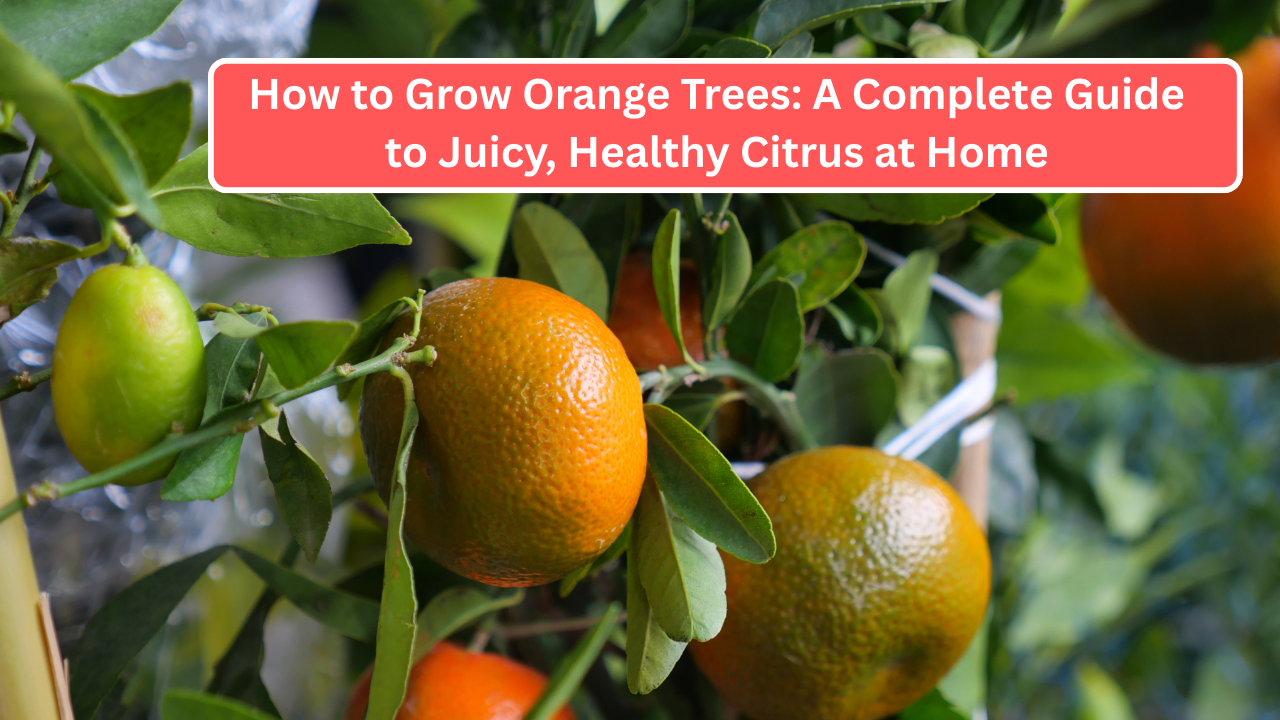
Growing your own orange tree at home is one of the most satisfying gardening experiences. There is something deeply rewarding about watching glossy green leaves develop, fragrant blossoms appear, and finally harvesting sweet, juicy oranges grown with your own care. Many people believe orange trees are difficult or only suitable for large orchards, but with the right approach, they can thrive in home gardens, backyards, terraces, and even large containers.
Orange trees are long-living plants that respond well to consistent care rather than constant attention. When their basic needs are met, they grow steadily, resist many problems, and produce fruit year after year. This complete guide explains how to grow orange trees successfully at home, from choosing the right plant to harvesting healthy, flavorful citrus.
Understanding Orange Trees and Their Growth Habit
Orange trees are evergreen fruit trees with a naturally balanced structure.

They develop a strong central trunk, spreading branches, and dense foliage that protects fruit from harsh sunlight. Growth is steady rather than fast, which allows the tree to build strength over time.
Once established, orange trees can remain productive for decades with proper care.
Why Orange Trees Are Worth Growing at Home
Homegrown oranges offer superior quality.

Freshly harvested oranges are sweeter, juicier, and more aromatic than store-bought fruit. Growing at home also allows you to control watering, feeding, and harvest timing.
Orange trees also enhance garden aesthetics with glossy leaves, fragrant flowers, and colorful fruit.
Choosing the Right Orange Variety for Home Growing
Variety selection is crucial.

Some orange varieties are better suited for home gardens, containers, or specific climates. Choose varieties known for good productivity, manageable size, and disease resistance.
Healthy nursery plants establish faster and begin fruiting sooner than weak or stressed plants.
Growing Orange Trees in the Ground vs Containers
Both methods work well.

Planting in the ground allows larger growth and higher yields. Container growing offers flexibility and is ideal for limited space or colder regions.
Your choice should depend on space, climate, and long-term plans.
Selecting the Ideal Location for Orange Trees
Sunlight drives fruit production.

Orange trees need full sun for most of the day to grow well and set fruit. Choose a location with good airflow and protection from strong winds.
Avoid low-lying areas where cold air or water may collect.
Preparing Soil for Orange Tree Planting
Soil quality affects long-term health.

Orange trees prefer well-draining soil that retains some moisture without becoming soggy. Heavy or compacted soil should be improved before planting.
Healthy soil supports strong root development and nutrient uptake.
Planting Orange Trees Correctly
Proper planting prevents future problems.

Plant the tree at the same depth it was growing previously. Spread roots gently and firm soil lightly around them.
Water thoroughly after planting to settle the soil.
Watering Orange Trees for Healthy Growth
Balanced watering is essential.

Orange trees prefer deep, consistent watering rather than frequent shallow watering. Allow the soil to dry slightly between watering sessions.
Overwatering causes root stress and reduces fruit quality.
Adjusting Watering by Season
Water needs change throughout the year.
During warm months, orange trees need more frequent watering. In cooler periods, reduce watering as growth slows.
Always check soil moisture before watering.
Feeding Orange Trees for Strong Growth and Fruit Production
Orange trees benefit from regular feeding.
Balanced nutrition supports leaf growth, flowering, and fruit development. Excess feeding causes excessive leaf growth with fewer fruits.
Moderate, consistent feeding produces the best results.
Importance of Mulching Around Orange Trees
Mulching improves soil conditions.
It helps retain moisture, regulate temperature, and suppress weeds. Organic mulch also enriches soil over time.
Keep mulch away from the trunk to prevent rot.
Understanding Flowering and Fruit Set
Orange trees produce fragrant blossoms.
Flowers usually appear when conditions are favorable. Healthy trees naturally set fruit, though some fruit drop is normal.
Balanced care supports better fruit retention.
Managing Fruit Drop Naturally
Fruit drop is common.
Trees often shed excess fruit to balance energy. This is normal and usually not a problem.
Consistent watering and feeding reduce excessive drop.
Pruning Orange Trees for Shape and Health
Pruning should be minimal.
Remove dead, damaged, or crossing branches to maintain airflow and structure. Avoid heavy pruning, which reduces fruiting.
Light shaping supports long-term productivity.
Protecting Orange Trees From Cold and Heat Stress
Temperature extremes affect growth.
Orange trees prefer warm conditions but can be stressed by frost or extreme heat. Protection during harsh weather preserves plant health.
Container-grown trees can be moved as needed.
Growing Orange Trees Indoors or in Protected Areas
Indoor or sheltered growing is possible.
Bright light and stable temperatures are essential. Growth may be slower, but fruiting is still possible with proper care.
This option suits colder climates.
Pest and Disease Prevention
Healthy trees resist problems better.
Good airflow, proper watering, and cleanliness reduce disease risk. Regular inspection helps catch issues early.
Avoid excessive moisture around roots and leaves.
Harvesting Oranges at the Right Time
Harvest timing affects flavor.
Oranges do not continue ripening after harvest, so pick them when fully colored and flavorful.
Taste testing helps determine readiness.
How Long Orange Trees Take to Bear Fruit
Patience is required.
Most orange trees take several years to produce fruit, especially young plants. Proper care speeds development.
Strong early growth leads to long-term productivity.
Long-Term Care for Productive Orange Trees
Consistency is key.
Regular watering, feeding, and observation keep trees healthy. Avoid sudden changes in care routines.
Stable conditions produce reliable harvests.
Common Problems and Simple Solutions
Yellowing leaves often indicate watering or nutrient imbalance.
Poor fruiting may result from low sunlight or overfeeding. Adjust conditions gradually.
Healthy soil and proper light prevent most issues.
Real Experiences From Home Gardeners
One home gardener shared that growing oranges became a family tradition. “The first harvest was small but incredibly sweet,” they said.
Another noted that container growing made winter protection much easier.
Observations From Experienced Citrus Growers
Experienced growers emphasize sunlight.
They note that most citrus problems trace back to low light or overwatering. Balanced care produces the best fruit.
Patience is always highlighted.
Benefits of Growing Orange Trees at Home
Homegrown oranges offer unmatched freshness.
They reduce grocery costs, improve garden beauty, and provide nutritious fruit. Orange trees also bring fragrance and shade.
Few plants offer such long-term rewards.
What You Should Know Before Growing Orange Trees
Orange trees grow slowly but steadily.
Overwatering is the most common mistake. Sunlight, drainage, and patience matter most.
With consistent care, beginners can succeed.
Questions and Answers About Growing Orange Trees at Home
Are orange trees easy to grow at home?
Yes, with proper sunlight and watering.
Can orange trees grow in pots?
Yes, many varieties grow well in containers.
How much sunlight do orange trees need?
Full sun is ideal.
How often should orange trees be watered?
When soil begins to dry slightly.
Do orange trees need fertilizer?
Moderate, regular feeding helps.
How long before orange trees produce fruit?
Usually several years.
Can orange trees grow indoors?
Yes, with bright light.
Why are my oranges dropping early?
Often normal or due to stress.
Is pruning necessary?
Only light pruning is needed.
Can beginners grow orange trees successfully?
Yes, with patience.
Do orange trees need mulch?
Yes, mulch is beneficial.
Are homegrown oranges sweeter?
Yes, noticeably.
Is growing orange trees worth it?
Absolutely.
Can orange trees live a long time?
Yes, decades.







Leave a Comment