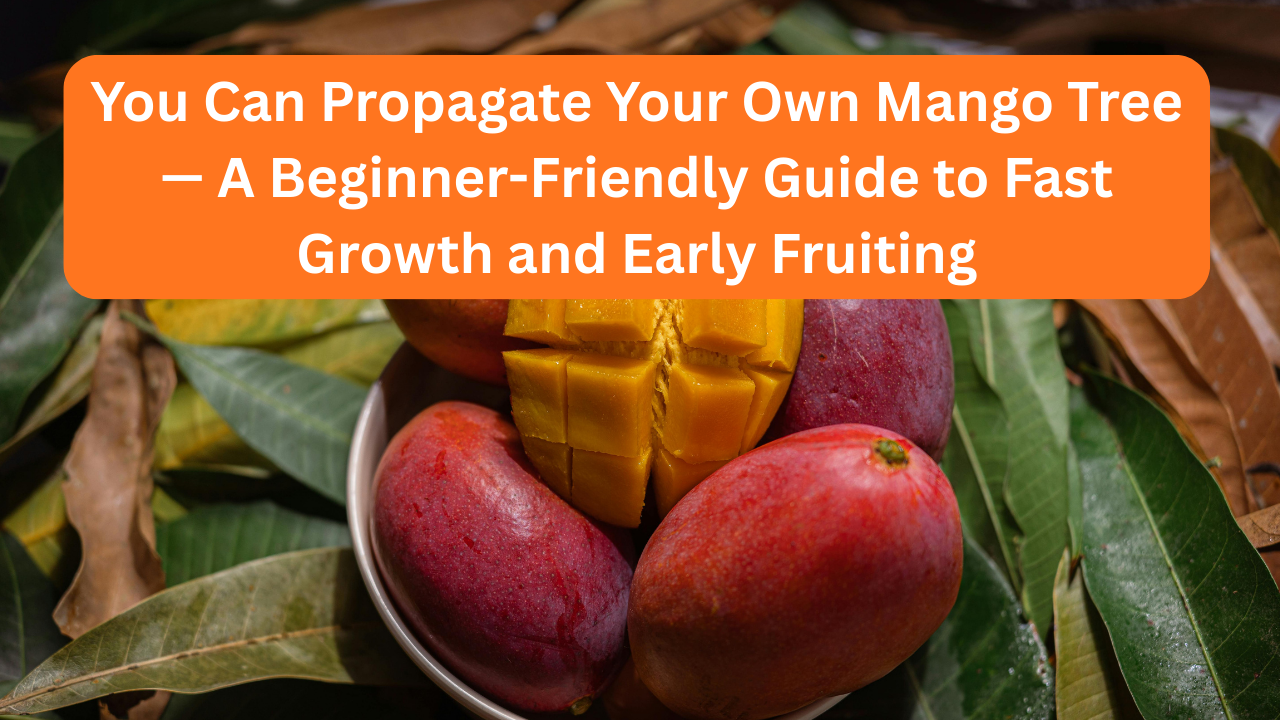
Growing a mango tree at home sounds like something only expert gardeners attempt. In reality, mango trees are surprisingly easy to propagate, even for beginners, if you follow the right steps. With patience, warmth, and a few simple techniques, you can turn a store-bought mango seed into a healthy, fast-growing tree.
Many home growers give up too early because mango propagation doesn’t behave like typical seeds. The secret is knowing how to prepare the seed correctly, how to encourage strong roots, and how to avoid the most common beginner mistakes.
Here’s a clear, step-by-step guide to propagating your own mango tree and setting it up for strong growth and earlier fruiting.
Why Grow Your Own Mango Tree?
Home-grown mango trees offer more than fruit.
They provide:
- Long-term food security
- A beautiful evergreen tree
- Strong shade and structure
- Satisfaction from growing something truly tropical
With proper care, mango trees can thrive even in backyards and large containers.
What’s Changing / What’s New
More people are growing mango trees at home because:
- Nursery plants are expensive
- Store-bought fruit seeds are viable
- Warm microclimates are more common
- Home propagation saves money
Better techniques are making success more common than ever.
Choosing the Right Mango Seed
Not all mangoes work equally well.
For best results:
- Use a fresh, ripe mango
- Avoid dried or old fruit
- Choose a variety known for strong flavour
- Organic fruit is ideal but not required
Freshness directly affects germination success.
How to Prepare the Mango Seed Properly
This is the most important step.
Step-by-Step:
- Remove the large husk from the mango pit
- Carefully pry it open to reveal the inner seed
- Handle gently to avoid damage
- Use the seed immediately
Planting the whole husk slows or prevents germination.
Why Removing the Husk Matters
The outer shell is extremely tough.
Removing it:
- Speeds up germination
- Prevents mold
- Allows roots to emerge freely
- Increases success rates dramatically
This step alone can cut germination time in half.
The Best Way to Germinate a Mango Seed
There are two beginner-friendly methods.
Method 1: Paper Towel Method
- Wrap seed in a damp paper towel
- Place inside a warm, dark container
- Keep slightly moist, not wet
- Roots appear within 1–3 weeks
Method 2: Direct Soil Method
- Plant seed flat in loose soil
- Cover lightly
- Keep warm and moist
Both methods work — warmth is the key factor.
Ideal Conditions for Fast Germination
Mango seeds love:
- Warm temperatures
- High humidity
- Loose, well-draining soil
- Indirect sunlight at first
Cold conditions will slow or stop growth entirely.
When to Move the Seedling Into a Pot
Once roots and a shoot appear:
- Use a deep pot with drainage holes
- Choose light, sandy soil
- Plant seed shallowly
- Water gently
Avoid disturbing the root during transplant.
How to Encourage Fast Early Growth
Early growth sets the foundation.
Do this:
- Place in bright, indirect sunlight
- Water when the top soil dries
- Protect from wind and cold
- Avoid fertiliser for the first few weeks
Strong roots come before fast height.
Common Beginner Mistakes to Avoid
Most failures come from simple errors.
Avoid:
- Overwatering
- Cold exposure
- Heavy soil
- Direct harsh sun too early
- Using chemical fertiliser too soon
Gentle care works best.
Can a Home-Grown Mango Tree Produce Fruit?
Yes — but patience matters.
Seed-grown mango trees:
- Take longer to fruit
- May not match the parent fruit exactly
- Still produce delicious mangoes
Grafted trees fruit faster, but seed-grown trees are stronger long-term.
How to Speed Up Fruiting Naturally
You can encourage earlier fruiting by:
- Keeping the tree slightly root-bound
- Providing consistent sunlight
- Avoiding excessive nitrogen
- Pruning lightly once mature
Stress-free growth leads to better flowering.
Growing Mango Trees in Containers
Mango trees grow well in pots.
Container tips:
- Use large, deep containers
- Prune regularly
- Rotate for even sunlight
- Protect roots from cold
Container-grown trees are easier to manage and protect.
Real Experiences From Home Growers
One beginner gardener shared, “I thought mango trees were difficult — mine sprouted in two weeks.”
Another said, “After removing the husk, everything changed. Growth was fast and strong.”
Success often comes down to preparation.
Signs Your Mango Tree Is Healthy
Look for:
- Bright green leaves
- Upright growth
- New leaf flushes
- Strong central stem
Healthy early growth predicts long-term success.
How Long Until You See Fruit?
Realistic timelines matter.
Typically:
- 3–6 years from seed
- Faster in warm climates
- Earlier with good pruning and care
Patience is rewarded.
Why Mango Trees Are Easier Than People Think
Once established, mango trees:
- Resist pests
- Handle drought well
- Thrive in heat
- Require minimal maintenance
The hardest part is the first few weeks.
What You Should Know Before Starting
Mango trees need:
- Space
- Sun
- Warmth
- Time
But they don’t need advanced skills.
Q&A: Propagating Mango Trees at Home
1. Can I grow mango from store fruit?
Yes.
2. Do I need to remove the husk?
Highly recommended.
3. How long does germination take?
1–3 weeks.
4. Can I grow mango indoors?
Yes, initially.
5. When should I move it outside?
After strong leaf growth.
6. Does it need full sun immediately?
No.
7. Can mango grow in pots?
Yes.
8. Will it produce fruit?
Yes, with patience.
9. Do I need fertiliser early?
No.
10. Is pruning required?
Later, yes.
11. Are mango trees fragile?
No, once established.
12. Can cold kill young plants?
Yes.
13. Should I graft it?
Optional.
14. Is this beginner-friendly?
Very.
15. What’s the biggest mistake?
Overwatering.


Leave a Comment